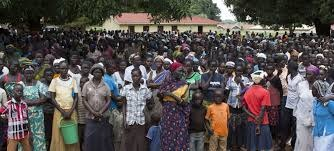
JUBA, 4 November 2025 (ICRC) – Intensifying violence across South Sudan has forced more than 445,000 people to flee their homes this year, worsening one of the world’s most prolonged humanitarian crises, the International Committee of the Red Cross (ICRC) said on Tuesday. The organization warned that as humanitarian funding declines and essential services near collapse, millions of people face growing hardship and uncertainty.
“All over the country, civilians bear the brunt of conflicts and violence,” said Florence Gillette, ICRC Head of Delegation in South Sudan. “They flee, try to rebuild their lives, and are forced to flee again. Conflict-related hostilities affected seven states out of ten, and inter-communal violence has occurred in almost all states. This cycle must end so that communities can recover from years of crisis.” The ICRC said the situation has been further compounded by climate-related disasters, including floods that have affected over 900,000 people—displacing 300,000 of them.
In 2025, the combined effects of internal conflict, spillover from the war in Sudan, and recurrent inter-communal violence have devastated communities across Upper Nile, Jonglei, Central and Western Equatoria, and Western Bahr el Ghazal. “When the fighting started in the village, I ran with my children and never looked back,” said Grace Wani, a displaced mother of four in Yambio. “Life in this temporary settlement is not easy. I worry for my children’s safety and our future.” Since January, the ICRC—working with the South Sudan Red Cross (SSRC)—has provided assistance to nearly 196,000 displaced people and returnees from Sudan. Aid efforts have included food and cash distributions, farming and livestock support, medical assistance, and access to clean water.
Between January and September, the ICRC’s humanitarian operations in South Sudan achieved the following: Provided life-saving aid to over 107,000 displaced people and returnees. Supported 88,000 farming and herding families with seeds, tools, and livestock treatment. Performed 3,541 surgeries for weapon-wounded patients in Akobo, Juba, and Renk hospitals. Improved access to clean water for 95,000 people.
Delivered mental health and psychosocial support to nearly 6,000 people. Facilitated 18,526 phone calls reconnecting displaced people with relatives. The ICRC also visited more than 5,000 detainees, trained nearly 4,000 people in first aid, and worked to prevent sexual and gender-based violence through awareness programs reaching 23,000 people. “The humanitarian needs are immense and growing. Without urgent support, the suffering of displaced families will only deepen,” Ms. Gillette warned.
The ICRC called on all parties to the conflict, authorities, and international donors to take immediate action to protect civilians and prevent a worsening catastrophe. 09:13 “We Ran and Never Looked Back”: Families Trapped in South Sudan’s Cycle of Displacement