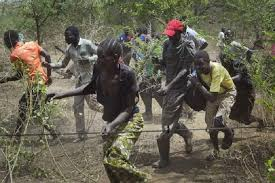
Juba – For 35-year-old Grace Wani, the sound of gunfire in her village in Western Equatoria marked the beginning of another painful journey. With four children in tow, she fled into the bush and walked for days without food or rest.
“When the fighting started, I ran with my children and never looked back,” she says softly. “Life here in the settlement is not easy. I worry for their safety and our future.” Grace is one of more than 445,000 people displaced in South Sudan in 2025 alone, according to the International Committee of the Red Cross (ICRC). The organization warns that as violence spreads and humanitarian funding dries up, the world’s youngest nation faces another wave of suffering.
The conflict, which has intensified across seven of the country’s ten states, is compounded by the ripple effects of the war in neighboring Sudan and worsening floods that have affected over 900,000 people.
“All over the country, civilians bear the brunt of conflict and violence,” said Florence Gillette, the ICRC’s Head of Delegation in South Sudan. “They flee, rebuild, and are forced to flee again. This cycle must end.” In towns like Kuajok and Yambio, thousands of displaced people live in makeshift shelters, surviving on minimal aid. Among them is Achol Marial, a returnee from Sudan who fled the war there earlier this year.
“When we reached Kuajok, I felt both relief and sadness,” she recalls. “I was back in my ancestral land, but I knew no one. Life was hard. My children often went to sleep hungry.” Things changed when ICRC assistance reached her settlement in September. “That evening, I cooked beans and porridge, and my children smiled again,” she said. “For the first time in months, we slept safely and full.”
In the first nine months of 2025, the ICRC and the South Sudan Red Cross have supported nearly 200,000 people through food distributions, medical services, farming inputs, and psychosocial care. The organization also performed more than 3,500 surgeries for weapon-wounded patients and helped 95,000 people access clean water. But with global attention shifting elsewhere, humanitarian organizations fear the crisis may slip further off the world’s radar.
“Without immediate support and respect for humanitarian principles, civilians will continue to pay the highest price,” said Ms. Gillette. For mothers like Grace and Achol, the hope is simple: peace, food, and a safe place to call home.